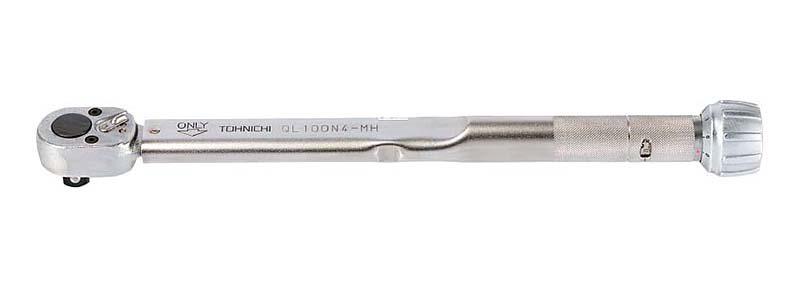
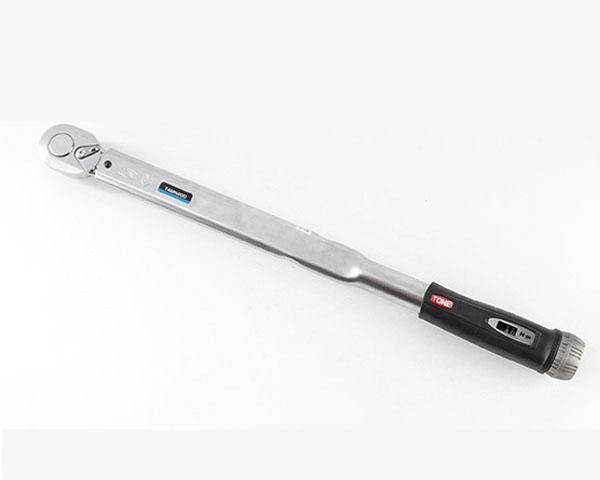
Tohnichi Torque Wrench QL25N-MH is a torque measuring and control tool of the click type, a product of Tohnichi Manufacturing Co., Ltd. – a world-leading Japanese brand specializing in torque control equipment. Tohnichi QL25N-MH is an essential tool in precision mechanical assembly applications, ensuring bolts and nuts are tightened to the exact required technical force, avoiding component damage caused by over-tightening or looseness that compromises safety.
Key Features
- High Accuracy: Tohnichi is a leading brand, ensuring superior accuracy (typically ±3% or ±4%) compared to regular torque wrenches, meeting or exceeding international standards like ISO 6789. This is extremely important in applications where precise tightening force directly affects performance and safety.
- Torque Range Suitable for Small Applications: The 5 Nm to 25 Nm range and 1/4 inch drive are ideal for tightening small bolts and nuts requiring low tightening force, commonly found in electronics, medical devices, motorbikes, bicycles, delicate machine parts, or high-sensitivity assembly assemblies.
- Clear Signaling Mechanism (Click Type): The "click" sound and release feeling provide high reliability, easily recognizable when the required force is reached even in noisy environments or when the user cannot directly look at the scale. This helps minimize errors due to over- or under-tightening.
- Easy to Use and Set: Simple torque adjustment handle, clear scale, helping users set the desired value quickly and accurately. The setting lock mechanism also helps avoid errors.
- Durable and Reliable: With high-quality materials and strict Japanese manufacturing processes, Tohnichi torque wrenches have a long service life and maintain accuracy over a long time, reducing calibration and replacement costs.
- Optimized Assembly Process: Using a torque wrench ensures uniformity during tightening, helping improve product quality, minimize errors, and increase productivity.
- Safety Assurance: Proper tightening force prevents thread damage, bolt breakage, material cracking, ensuring structural integrity and user safety.
Effective Usage Instructions
- Set Torque: Turn the handle (or adjustment ring) to set the desired torque value on the scale. Then, lock the setting mechanism (if available) to prevent accidental changes.
- Choose Appropriate Socket: Attach a socket (1/4 inch) of the correct size for the bolt/nut to be tightened onto the square head of the wrench.
- Position Wrench: Place the socket on the bolt/nut. Ensure the wrench is perpendicular to the tightening surface for the most accurate applied force.
- Tighten: Apply steady and stable force to the wrench handle clockwise (or counterclockwise if reversible) until hearing a "CLICK" sound and feeling the release.
- Stop Tightening Immediately: As soon as you hear the "CLICK" sound, stop applying force and release the wrench from the bolt/nut. Do not try to tighten further.
- Always Return to 0 After Use (for click type torque wrenches): After completing work, turn the handle to return the set torque to the lowest level in the measuring range (usually "0" or the lowest scale value). This releases the internal spring, extending lifespan and maintaining wrench accuracy.
Applications
- Electronics Manufacturing and Assembly: Tightening small screws in electronic devices and circuit boards.
- Automotive and Motorbike Industry: Assembling engine parts, brake systems, chassis with precise tightening force. Especially useful for low torque details.
- Aerospace: Assembling aircraft and satellite components where absolute precision and safety are required.
- Medical Equipment: Assembling medical instruments and diagnostic equipment.
- Precision Machinery Manufacturing: Assembling machine tool parts, robots, automation machinery.
- Maintenance and Repair: In service centers and maintenance shops to ensure joints are properly tightened after repair.
- Bicycle Industry: Assembling parts like handlebars, saddles, brake levers, ensuring safety and performance.
Usage Notes
- Do Not Use as a Regular Lever: A torque wrench is a measuring tool, not a regular wrench to loosen stuck bolts. This can damage the internal torque measuring mechanism.
- Periodic Calibration: Despite being a high-quality tool, torque wrenches still need periodic calibration (usually every 6-12 months or after a certain number of usage cycles) by certified laboratories to ensure accuracy.
- Avoid Drops or Impacts: Strong impacts can distort the internal torque measuring mechanism.
- Proper Storage: Store the wrench in a dedicated storage case (if available) in a dry, cool place, avoiding dust and high humidity.
- Do Not Exceed Measuring Range: Do not attempt to tighten beyond the maximum limit of the wrench (25 Nm) as it may cause permanent damage.
- Read Manual Carefully: Each torque wrench model may have specific instructions on setup and maintenance. Always read the manufacturer's documentation carefully.
- Avoid Lubricating Grease: Do not apply grease to the measuring parts of the wrench unless explicitly specified by the manufacturer.
Tohnichi Torque Wrench QL25N-MH is a premium, reliable torque measuring tool indispensable in industries requiring absolute precision in assembly. With high accuracy, clear signaling mechanisms, and superior durability, it helps engineers and technicians ensure every joint is properly tightened to standard, thereby enhancing product quality, enhancing safety, and optimizing production processes.