Overview
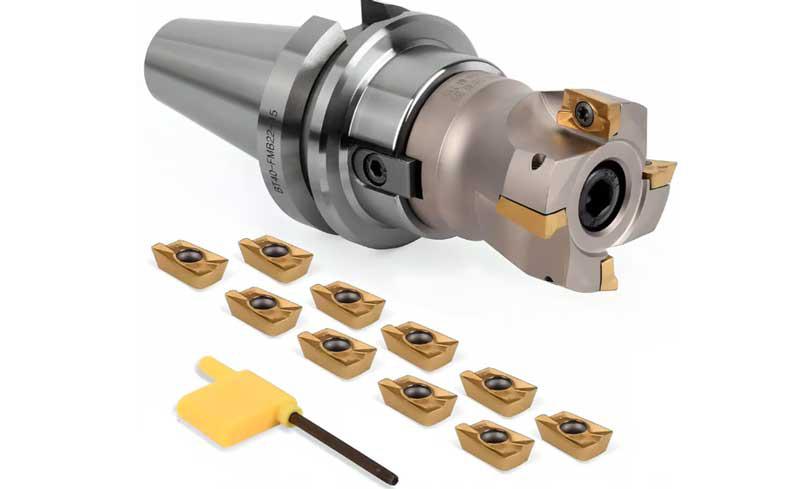
Face milling cutters are rotating cutting tools equipped with multiple cutting edges (typically indexable carbide inserts) arranged around the periphery and face. The tool axis is perpendicular to the workpiece surface, making it specialized for high-efficiency machining of large flat surfaces.
Key Advantages
- High Machining Efficiency: Large diameter and multiple inserts enable rapid material removal across wide surfaces, reducing machining time.
- High Rigidity: The combination of large diameter and short tool shank provides high rigidity and minimizes cutting vibrations.
- Superior Surface Quality: Produces flat, smooth surfaces with minimal scratches, especially when using conventional milling methods.
- Reduced Cutting Force: Many face mills (e.g., 45° lead angle) generate a downward cutting force (down milling), stabilizing workpiece clamping and reducing wear for extended insert life.
- Economy and Flexibility: Indexable carbide insert designs allow easy replacement of worn or damaged inserts without replacing the entire tool, saving costs.
Manufacturing Applications
- Flat Surface Creation: Primary application for roughing or semi-finishing to flatten surfaces prior to finish machining.
- Mating Surface Machining: Creates high-precision flat contact surfaces for machine components, flanges, and housings.
- Diverse Material Machining: Effectively processes steel, alloy steel, cast iron, aluminum, copper, and non-metallic materials like engineering plastics.
- Slot and Step Machining: 90° lead angle face mills are suitable for side edges, steps, and shallow slots.
Usage Guidelines
- Tool Selection: Choose the appropriate face mill body and insert material (Carbide, Cermet, PCD) and lead angle (45°, 90°) based on workpiece material and machining requirements.
- Cutting Parameters: Set proper spindle speed, feed rate, and depth of cut ($a_p$) based on manufacturer recommendations.
- Setup: Ensure secure workpiece clamping and proper tool runout minimization.
- Coolant: Use appropriate coolant to reduce heat, lubricate, and increase tool life.